
Outdoor billboard advertising remains one of the most powerful “Out-Of-Home” (OOH) channels in Kenya. Whether in Nairobi, Mombasa, Kisumu or other fast-growing towns, a well-placed billboard can deliver massive reach and visibility for your brand. But many advertisers in Kenya make costly errors that undermine results. In this post, you’ll learn the top billboard advertising mistakes to avoid in Kenya, how to fix them, and how to maximize your return on investment.
If you’re exploring billboard campaigns or planning to list your billboard space, consider browsing KenyaBillboards.com — a marketplace where advertisers and property owners connect.
Let’s dive in.
Why Billboard Advertising Still Matters in Kenya
Before the pitfalls, it’s helpful to re-ground why billboards are still relevant in Kenya:
- Billboards at key intersections, highways, and urban thoroughfares capture high volumes of daily traffic (drivers, matatus, pedestrians).
- They reinforce brand awareness in a physical, location-based way that digital ads cannot fully replicate.
- Kenya’s advertising agencies and media owners (like Alliance Media, Magnate Ventures, Firmbridge) continue to invest in prime outdoor assets. (alliancemedia.com)
- Costs may be steep in Nairobi for static or digital boards (KES 350,000+ for static, up to KES 1,000,000+ for digital) (alternativeadverts.co.ke), so avoiding waste is critical.
Given this, making avoidable mistakes can turn what should be a high-impact campaign into a money drain.
Top Billboard Advertising Mistakes to Avoid in Kenya
Poor Location Choice — Ignoring Traffic Patterns & Visibility
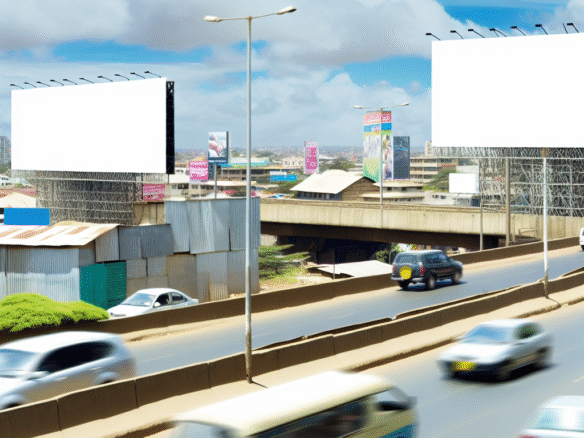
One of the most fundamental errors is selecting a billboard location without studying traffic flow, sightlines, or obstruction. In Kenya, many boards are placed behind trees, too far from the road, or where visibility is blocked by other signage or infrastructure.
How to avoid:
- Conduct a physical site survey at different times (morning rush hour, evening).
- Ensure no obstruction from poles, wires, foliage.
- Choose corners, curves, or places where vehicles must slow down (junctions, roundabouts).
- Use traffic count data (if available) or get media owners’ footfall/vehicle estimates.
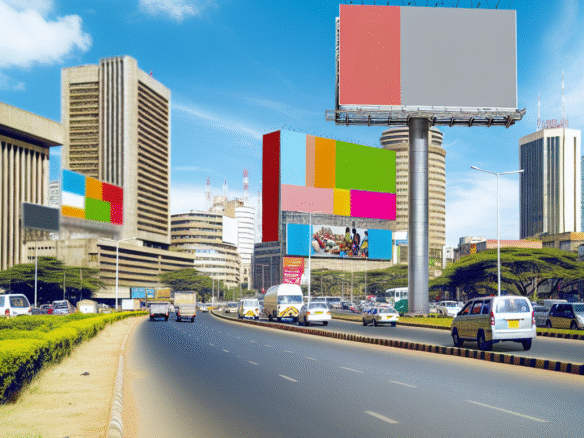
A billboard on a “prime Nairobi highway like Waiyaki Way or Thika Superhighway” is far more valuable than one buried in a side road. (alliancemedia.com)
Overcrowded or Confusing Design
A huge mistake is cramming too much text, too many visuals, or complex messaging — especially for moving audiences. Kenyan billboard viewers are often in vehicles, so clarity and brevity matter.
How to avoid:
- Follow the “six-word rule” or “seven seconds rule”: your message should be grasped in ~7 seconds.
- Use high-contrast colors, big fonts, limited text.
- Emphasize one primary message or call to action.
- Avoid clutter of logos, disclaimers, or “fine print” that cannot be read at speed.
Not Tailoring to Local Context & Language
Kenya is a diverse market. Using generic or foreign-centric visuals or language can alienate local audiences. Some boards in Kenya suffer because they ignore local culture, dominant languages (Swahili, English, local dialects), or local idioms.
How to avoid:
- Use local imagery, cultural references, or colors that resonate (but avoid stereotypes).
- Test Swahili versions or bilingual headlines if needed.
- In rural or county settings, consider regional dialects or icons relevant to locals.
Failing to Secure Permits & Regulatory Compliance
Many campaigns in Kenya get delayed or penalized because the advertiser or media owner failed to secure municipal or county permits, or failed to follow signage regulations (size, lighting, safety).
How to avoid:
- Engage local authorities (county, municipal planning) early.
- Confirm structural safety, lighting rules, and environmental guidelines.
- Ensure regular maintenance to avoid damaged or faded boards that violate local codes.
Neglecting Maintenance & Weather Damage
Kenya’s climate — high UV, heavy rains (especially in the long rains and short rains seasons) — can degrade billboard materials rapidly. A faded or torn billboard is worse than none.
How to avoid:
- Use high-quality vinyl, UV-resistant inks, and durable, weatherproof materials.
- Schedule regular checks (monthly) for tears, peeling, fading.
- In coastal or humid regions (Mombasa, Malindi), invest in stronger protective layers.
- Have a backup “repair budget” in your campaign costs.
Ignoring Digital & Offline Integration
Many advertisers treat billboard campaigns in isolation, not integrated with digital or mobile efforts. That misses synergy and measurable conversions.
How to avoid:
- Add QR codes, short URLs, SMS codes, or mobile call-to-action (e.g., “text to 1234”) to drive online engagement.
- Run simultaneous social media or search ads targeted around the billboard geography.
- Use geofencing or location-based targeting to capture users who saw the billboard.
- Measure uplift in web traffic or mobile enquiries in the target geography to validate performance.
Running Campaigns for Too Short a Duration
Launching a billboard for just a week or a few days often fails to generate meaningful recall and impact. In Kenya, long-term campaigns (4–8 weeks or more) tend to yield better results.
How to avoid:
- Plan for longer durations when possible (minimum one month).
- Negotiate discounts or better rates for extended contracts.
- Consider rotating messages over long durations to maintain freshness.
Poor Timing / Seasonality Ignored
Billboard campaigns that ignore local events, seasonal traffic, or holidays may waste money. For example, launching a consumer goods billboard just before a major festival or during school vacations may miss ideal timing.
How to avoid:
- Align your campaign launch with high-traffic periods, holidays, or festival seasons (e.g. Easter, Christmas, Jamhuri Day).
- Avoid rainy seasons (mid-March to May; October to December) if installation or damage risk is high.
- Monitor competing advertising activity and avoid launching in periods of media saturation.
Poor Measurement & No Feedback Loop
A too-common error is launching a billboard campaign and assuming it “works” without tracking or measuring. Without metrics, you can’t optimize or show ROI.
How to avoid:
- Use unique call-to-actions, trackable QR codes, or custom landing pages that tie to that billboard.
- Survey new leads: ask “where did you see us?” in phone or online forms.
- Compare metrics (web visits, calls, footfall) before, during, and after the campaign.
- Use campaign analytics to optimize future placements, message variants, or durations.
Choosing an Inexperienced or Unreliable Media Owner
In Kenya’s outdoor advertising industry, many small players or informal billboard owners exist. Some may promise high visibility but deliver poor service, late installations, or subpar quality.
How to avoid:
- Use reputable media owners or platforms (e.g. KenyaBillboards.com for listing or booking credible inventory).
- Check client case studies, references, and physical quality of their boards.
- Demand a site visit, transparency in rates, installation schedule, and proof-of-performance (photos, traffic data).
- Prefer media owners with multiple boards and a track record (e.g., Magnate Ventures, Alliance Media, Firmbridge) (mfc.ke).
How Kenyan Advertisers Can Succeed — A Checklist
Below is a concise checklist you can follow when planning your billboard campaign in Kenya:
- Define campaign goal & KPI (brand awareness, lead generation, footfall, call-ins)
- Research and shortlist candidate locations
- Survey and photograph sites to assess visibility
- Check permit & regulatory requirements with the county
- Design for simplicity, clarity & local relevance
- Integrate digital elements — QR, SMS, geo-targeting
- Negotiate duration & pricing (longer terms often lower cost per week)
- Incorporate a maintenance plan
- Track performance & collect feedback
- Review results, learn, and optimize next campaign
How KenyaBillboards.com Helps You Avoid Mistakes
If you’re a billboard space owner or advertiser in Kenya, the KenyaBillboards.com platform offers a number of advantages to help you avoid many of the pitfalls discussed above:
- It acts as a marketplace where advertisers can list and browse billboard inventory across Kenya, bringing transparency in pricing and location.
- It helps connect property owners (rooftops, walls, building facades) with advertisers, giving more options beyond traditional media owners.
- It encourages accountability: listings often include photos, site information, and owner contact details.
- It streamlines booking, enabling advertisers to compare multiple offers across towns.
By leveraging such a platform, advertisers can reduce risk of paying for hidden or poor-quality boards, and property owners can monetize their billboards more reliably.

Join The Discussion