
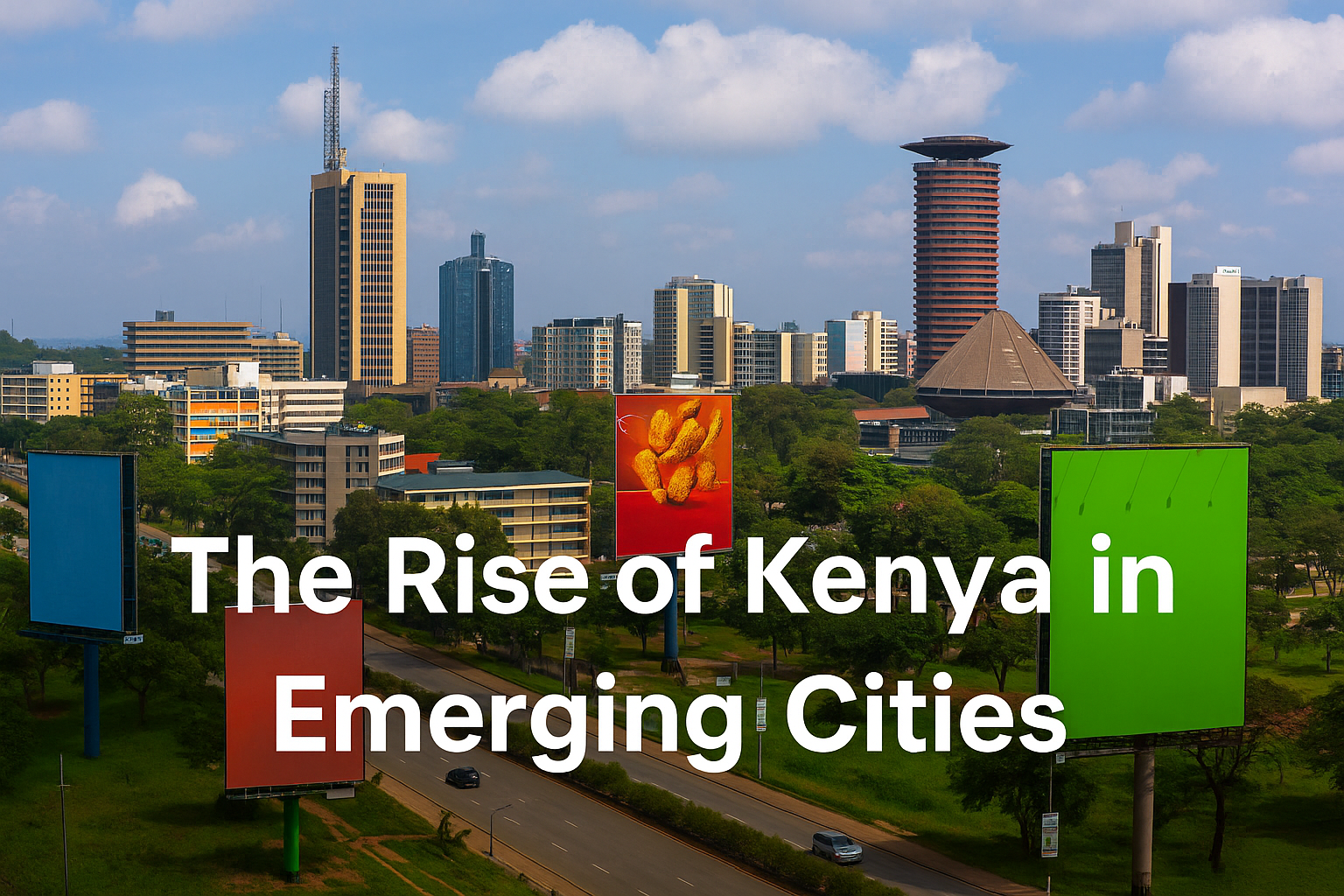
Kenya is undergoing a remarkable urban transformation. As its cities expand beyond Nairobi and Mombasa, emerging urban centers are rapidly gaining prominence. This blog explores how advertisers can strategically leverage the rise of Kenya’s emerging cities—such as Ruiru, Nakuru, Ongata Rongai, and Kitengela—using the dynamic medium of billboards. Learn how to tap into this accelerating urban shift to reach diverse audiences, align with growth trajectories, and elevate brand impact across Kenya.
Why Kenya’s Emerging Cities Are Poised for Advertising Growth
Rapid Urban Expansion
Kenya is experiencing fast urbanization. Currently around 30% of the population lives in urban areas, and more than 250,000 Kenyans move to cities each year. Projections indicate that by 2030, half the population will be urban. Nairobi alone has grown from 290,000 residents in 1960 to approximately 5 million in 2023. This surge in urban dwellers drives demand for infrastructure—roads, malls, housing—and importantly, eye-catching advertising platforms like outdoor and digital billboards.
Spotlight on Key Emerging Cities
- Ruiru: Situated around 20 km northeast of Nairobi, Ruiru has become the fourth largest urban center in Kenya. Its population jumped from 238,858 in 2009 to 490,120 in 2019. This fast-growing urban hub now hosts parts of Tatu City’s industrial and residential developments.
- Tatu City: A flagship 5,000-acre mixed-use Special Economic Zone north of Nairobi. It is home to over 100 business entities and multiple residential estates, aligning with Kenya’s Vision 2030.
- Nakuru: Elevated to city status in December 2021, Nakuru is now Kenya’s fourth city. With an urban population of over 570,000, it’s a major Rift Valley hub with strong agricultural and manufacturing bases.
- Ongata Rongai and Kitengela: Suburbs growing rapidly as escape routes from Nairobi’s congestion. Ongata Rongai has a population of around 172,000, while Kitengela has more than 150,000 residents. Both thrive on affordability and proximity to Nairobi, making them hotspots for new housing, malls, and road networks.
Each of these locales presents ripe advertising terrain, with increasing footfall, rising income levels, and expanding infrastructure—making them prime for impactful outdoor visibility.
The Booming Billboard and Outdoor Advertising Sector
Digital Billboards on the Rise
Kenya’s billboard advertising sector is booming—especially digital billboards. Advertisers are embracing high-resolution, energy-efficient outdoor LED displays suited for dynamic content delivery in varied weather.
Premium Locations for High-Impact Reach
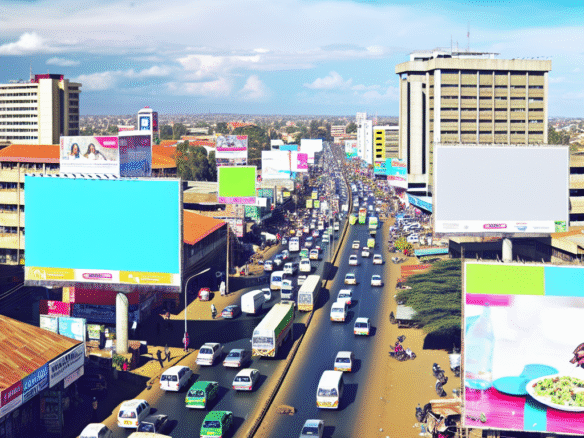
In Nairobi, areas such as Karen and Westlands are favored for elite out-of-home (OOH) exposure, attracting affluent customers and decision-makers. Strategically, as emerging cities develop, advertisers can similarly target dominant thoroughfares, malls, and business districts in places like Nakuru or Kitengela to occupy frontline ad spaces ahead of competitors.
Advertising as a Growth Lever in Emerging Cities
Outdoor advertising is more than visibility—it’s a discovery engine in expanding markets. As residential, commercial, and industrial areas emerge, early investment in billboards establishes brand presence at the ground level of growth. Kenya Billboards offers resources and placements to help advertisers align campaigns with this momentum: Kenya Billboards.
Maximizing Value: Strategies for Kenyan Advertisers
Target City-Specific Campaigns with Local Relevance
Advertisers should tailor messages for local sensibilities—for instance:
- In Ruiru Town, appeal to commuter audiences on Thika Road.
- In Kitengela, tap into narratives of suburban living and affordability.
- In Nakuru, resonate with agribusiness and regional commerce imagery.
Blend Traditional and Digital Outdoor Formats
Outdoor LED ads are growing—but traditional static billboards remain cost-effective for longer-term campaigns. A mix ensures broad coverage—especially in areas where power or infrastructure may still be catching up.
Partner with Local Urban Projects
Tatu City’s designation as a Special Economic Zone brings tax incentives and infrastructural advantages. Positioning ads near these zones—especially during business park development or residential launches—can dramatically maximize ROI.
Similarly, Nakuru’s city status elevation offers prestige and momentum, making billboard placements feel contemporary and forward-looking.
Use Data-Driven Placement and Rotation
Leverage demographic and traffic data to cycle ads in high-traffic nodes: along bypasses, near markets and malls, and adjacent to new housing projects. Kenyan advertisers can use resources like Kenya Billboards to identify optimal locations and rotation schedules.
Internal and External Linking Strategy for SEO Value
- Internal Links:
- Link to pages on urban advertising best practices.
- A post or page on digital vs static billboard ROI.
- A case study on successful billboard campaigns in Nairobi.
- External Links:
- Kenya Billboards – for billboard inventory and services.
- Government and census pages on urban trends.
- Profiles on Tatu City and Konza Technopolis.
Sample SEO-Optimized Structure and Word Count Outline
| Section | Approx. Word Count |
|---|---|
| Introduction | 150 |
| Urban Expansion Overview | 250 |
| Highlight Emerging Cities (Ruiru, Tatu, Nakuru, Kitengela, Ongata Rongai) | 350 |
| Billboard & Outdoor Advertising Trends | 200 |
| Strategic Recommendations for Advertisers | 300 |
| Internal & External Link Guidance | 100 |
| Conclusion | 150 |
| Total | ~1,500 |
Final Thoughts—Why Timing Matters Now
Kenya’s emerging cities are not tomorrow—they’re already growing. With increasing populations, new infrastructure, and economic momentum, the window to establish brand presence is now. Early movers gain visibility, trust, and top-of-mind awareness in communities just coming into their own.
By combining targeted outdoor advertising, strategic placements, and local relevancy, Kenyan advertisers can ride the wave of urbanization to lasting impact—and Kenya Billboards stands ready to support that journey.

Join The Discussion