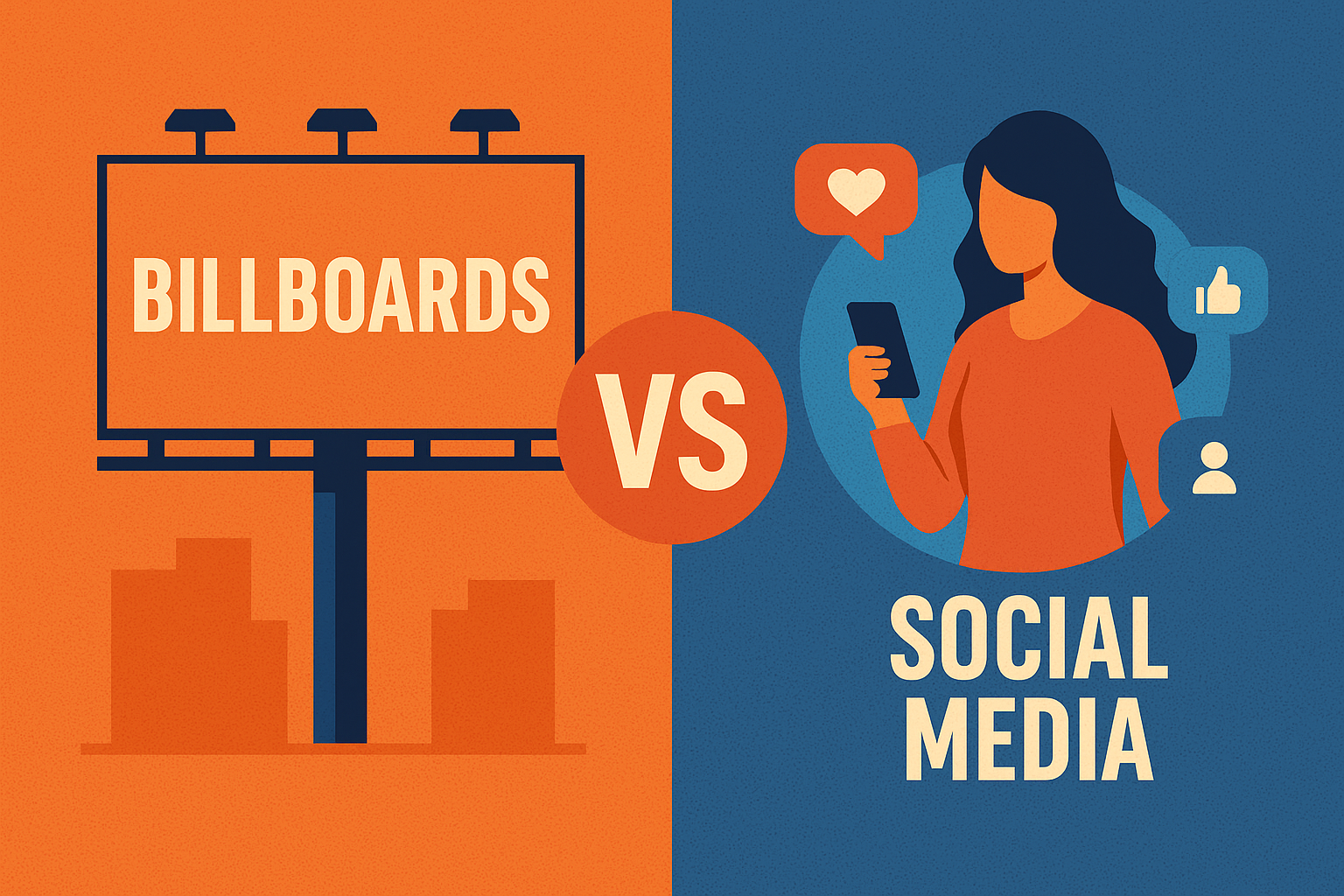
In Kenya’s ever-evolving marketing scene, advertisers often face a critical decision: should they invest in billboards (out-of-home advertising) or pour resources into social media campaigns? Each medium has strengths, limitations, and unique roles in brand building, awareness, and conversions. This in-depth comparison helps Kenyan marketers understand when and how either channel—or a mix—works best, based on data, local context, and real-world examples.
Why This Matters: The Kenyan Marketing Landscape in 2025
Before diving into comparisons, here’s why this debate is especially relevant in Kenya today:
- Kenya had 15.1 million active social media user identities in early 2025, representing about 26.5% of the population.
- Kenyans rank among the top users globally, spending 3 hours 43 minutes daily on social media.
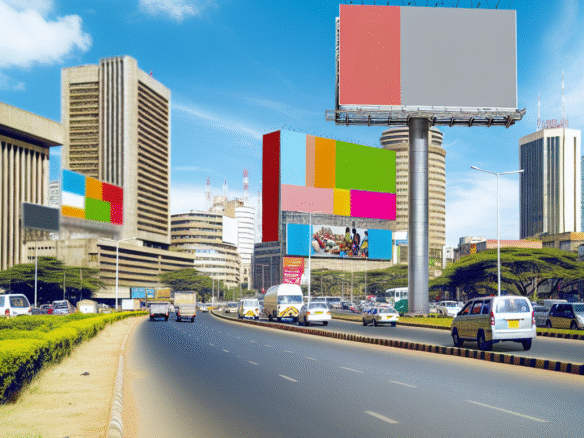
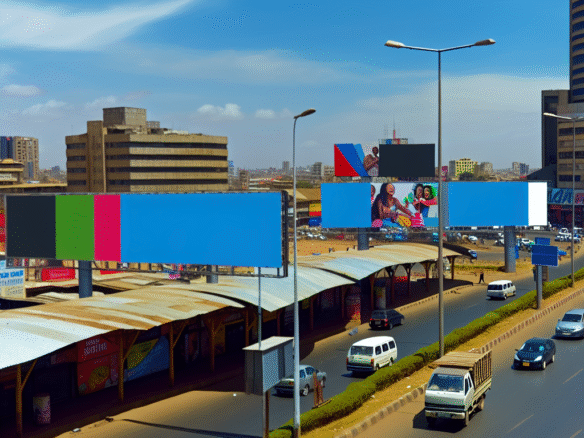
- Yet out-of-home (OOH) advertising remains critical in urban and peri-urban zones. Nairobi, Mombasa, Kisumu, Nakuru, Eldoret, and other towns feature high-traffic roads suited for billboards.
- A survey found that 67% of MSMEs in Kenya market primarily through social media.
The coexistence of high digital usage and still-thriving outdoor infrastructure makes the “billboards vs social media” question a strategic, not binary, decision.
Billboards (Out-of-Home Advertising) in Kenya
Strengths & Advantages of Billboards
- High Visibility in High-Traffic Zones
Strategic placement along busy highways, junctions, and city arteries positions billboards to reach commuters, pedestrians, and motorists. Companies like Magnate Ventures boast over 1,230 billboards nationwide, with strong presence across Nairobi, Mombasa, Kisumu, Eldoret, and Nakuru. - Constant Exposure (24/7 Brand Presence)
Once the billboard is live, it delivers impressions continuously, day and night. - Broad Reach Across Demographics
Billboards don’t rely on digital literacy or device ownership. They reach motorists, pedestrians, informal sector workers, and those less online. - Strong for Brand Awareness & Branding Campaigns
Excellent for reinforcing brand recall, slogans, or imagery—especially in combination with digital campaigns. - Local & Regional Targeting
For county-level or town-level campaigns, billboard placement enables geographically precise coverage. - Tangible Credibility & Permanence
Seeing a brand on a massive billboard lends credibility and signals market presence.
Challenges & Limitations of Billboards
- High Upfront Costs: Designing, printing, installing, and leasing billboard space can be expensive, especially in prime urban locations.
- Limited Messaging Real Estate: You have seconds to capture attention, so messaging must be concise and clear.
- No Direct Measurement or Attribution: Tracking ROI requires indirect methods like surveys or promo codes.
- Regulation & Permitting: Municipal authorities may impose placement restrictions.
- Maintenance Issues: Weather and vandalism can affect billboard durability.
- Static Nature: Unless using digital billboards, you can’t update creatives instantly.
Social Media Advertising in Kenya
Strengths & Advantages of Social Media
- Targeted Reach & Granular Segmentation
Platforms like Facebook, Instagram, TikTok, and YouTube allow targeting by age, gender, interests, location, and behavior. - Measurable ROI & Analytics
Every impression, click, and conversion can be tracked, making it easy to calculate ROI. - Cost-Efficient Entry Levels
Campaigns can start with small budgets and scale depending on performance. - Multimedia Flexibility
Run image, video, carousel, or story ads with creative variations. - Engagement & Interaction
Two-way communication through comments, likes, and direct messages builds relationships. - Remarketing & Funnel Integration
Retarget users who interacted with your previous ads for improved conversion rates. - Fast Iteration & Testing
Campaigns can be modified in real time for better performance.
Challenges & Constraints of Social Media
- Digital Divide & Access Barriers: Some rural areas still lack internet access or smartphone penetration.
- Ad Saturation & Rising Costs: Increasing competition drives up cost per impression.
- Algorithm Dependence: Organic reach has declined; paid reach depends on algorithm changes.
- Ad Fraud & Low-Quality Engagement: Fake clicks and bots can skew campaign metrics.
- Data Privacy Regulations: Policies on digital advertising may tighten in Kenya.
- Short Attention Spans: Ads have limited time to capture user interest.
Direct Comparison: Billboards vs Social Media in Kenya
| Criterion | Billboards / OOH | Social Media / Digital |
|---|---|---|
| Reach & Scale | High in physical hotspots; limited targeting | Highly scalable; precise audience segmentation |
| Targeting Precision | Geographical targeting only | Demographic, behavioral, interest-based targeting |
| Creativity Flexibility | Static imagery; limited text space | Dynamic formats: video, carousel, interactive ads |
| Tracking & ROI | Indirect measurement | Real-time analytics and conversion tracking |
| Cost Barrier | Higher upfront costs | Flexible budgets; scalable spending |
| Branding vs Direct Response | Strong for brand recall | Effective for both branding and conversions |
| Durability / Longevity | Continuous visibility over weeks or months | Ad fatigue over time; needs refresh cycles |
| Integration Potential | Works best with digital follow-up campaigns | Easily integrates with remarketing and lead generation |
Many Kenyan advertisers combine both channels: billboards for reach and awareness, social media for engagement and conversion tracking.
When to Use Billboards, Social Media, or Both in Kenya
Use Cases & Strategy Scenarios
- Launching a Signature Product in Nairobi
Billboards on major highways create awareness, while social ads drive online interaction and leads. - Community Retail or Branch Announcements
Billboard placement in county towns combined with localized social ads reaches both offline and online audiences. - Brand Reinforcement During Events or Holidays
Billboards build visibility; social media runs promotions or contests to increase participation. - Markets with Low Digital Penetration
Billboards dominate in rural or underserved regions with limited internet access. - When Budgets Are Limited
Social ads allow testing before committing to higher-cost billboard campaigns. - High-Saturation Urban Campaigns
A blend ensures both physical and digital dominance in competitive markets like Nairobi.
Local Examples & Providers in Kenya
- KenyaBillboards.com: A platform for booking and managing billboard inventory across Kenya.
- Magnate Ventures: Operates over 1,230 billboards in urban and peri-urban areas.
- Alliance Media Kenya: Known for digital billboards in high-traffic locations.
- Neo Media Ltd: Specializes in LED screens and programmatic DOOH advertising.
- Lookmedia Kenya: Offers backlit and static billboard advertising solutions.
- Firmbridge: Provides large-format billboards and street pole ad boxes nationwide.
Keywords & SEO Strategy for Kenyan Market
Target these keywords for better Google and YouTube rankings:
- Kenya billboard advertising
- Billboards in Nairobi vs social media
- Outdoor advertising companies in Kenya
- Social media marketing Kenya
- Digital out-of-home Kenya
- Billboard cost Kenya
- Social media ROI Kenya
- Billboards vs social media Kenya
- Best advertising channels Kenya
- Kenya OOH advertising agencies
Use primary keywords in titles, meta descriptions, headings, and image alt text while keeping content natural and readable.
Tips & Best Practices for Kenyan Advertisers
- Scout High-Traffic Locations before renting billboard space.
- Keep Designs Minimalistic with bold colors and large fonts.
- Bridge Offline to Online using QR codes or short URLs on billboards.
- Test Creatives Digitally First before scaling to billboards.
- Track Performance using promo codes or landing pages for attribution.
- Rotate Campaigns Regularly to maintain freshness and attention.
- Maintain Brand Consistency across offline and online platforms.
- Check Permit Requirements with local authorities before installations.
- Time Campaigns Around Key Events like holidays, elections, or major launches.
- Monitor Budget Performance and reallocate funds dynamically for the best ROI.
Final Verdict
There’s no universal answer. For brand visibility and broad audience reach, billboards remain powerful in Kenya. For precision targeting, engagement, and measurable ROI, social media excels.
The best results often come from a hybrid strategy: billboards build awareness, while social media converts interest into measurable actions. Kenyan businesses combining both channels usually achieve stronger marketing impact and sustainable results.


Join The Discussion